Moisture mapping and documentation
We identify the full wet area, including hidden moisture behind finishes, and document conditions so drying targets and repair scope are clear.
Serving Arlington, Virginia & surrounding areas
Fast response for leaks, floods, and burst pipes with careful drying, cleanup, and repair planning that protects your home or business from lingering moisture and mold risk.
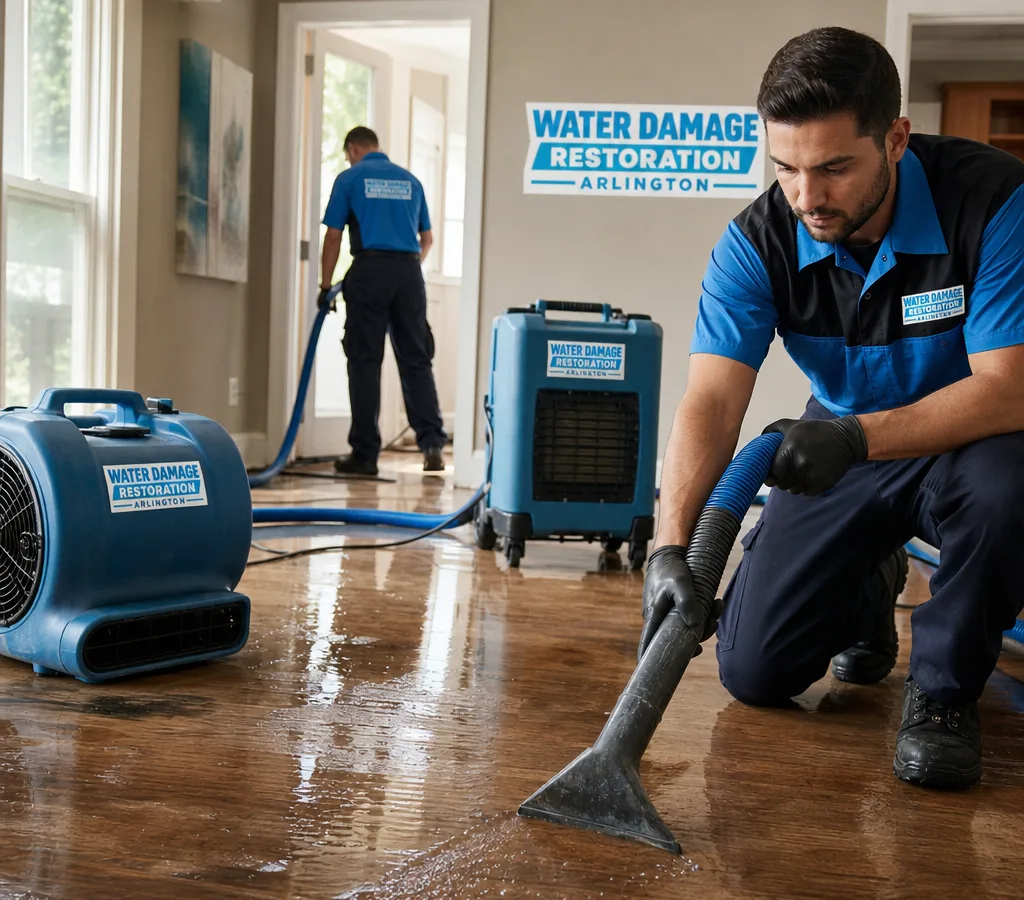
Water damage spreads the longer it sits. Drywall wicks moisture, wood swells, flooring cups, and hidden pockets of dampness can stay trapped behind baseboards and under cabinets. For water damage Arlington VA properties, the goal is simple: stop the source, remove the water, dry the structure, and document what was affected so repairs are straightforward.
Water Damage Restoration Arlington works with homeowners, landlords, and commercial property managers across Arlington, VA. You get a clear on-site plan and a written scope that matches what we find, not guesses made from a distance.
If you are trying to decide what to do first, start by keeping people safe around electricity, stopping the water if possible, and limiting foot traffic through wet areas to avoid spreading contamination and pushing water deeper into flooring seams.
Water damage in Arlington is rarely one-size-fits-all. A condo near the Metro can have water migrate into shared walls and chase lines, while a single-family home can have water run under multiple rooms before it shows up. Our team focuses on the full path of water, including what you cannot see.
Common calls we handle:
We serve Arlington neighborhoods where building types vary block to block, which changes how water behaves. In Clarendon and Ballston, multifamily buildings can mean water travels vertically and affects units above or below. In Rosslyn, commercial spaces and high-rise corridors often need fast drying with minimal disruption and clear documentation for building management. In Shirlington, garden-style condos and townhomes often have slab-adjacent moisture that needs careful monitoring to avoid trapping water under flooring.
If you are looking for water damage Arlington help that is practical and organized, we start by mapping the moisture so the dry-out is based on measurements, not time guesses.
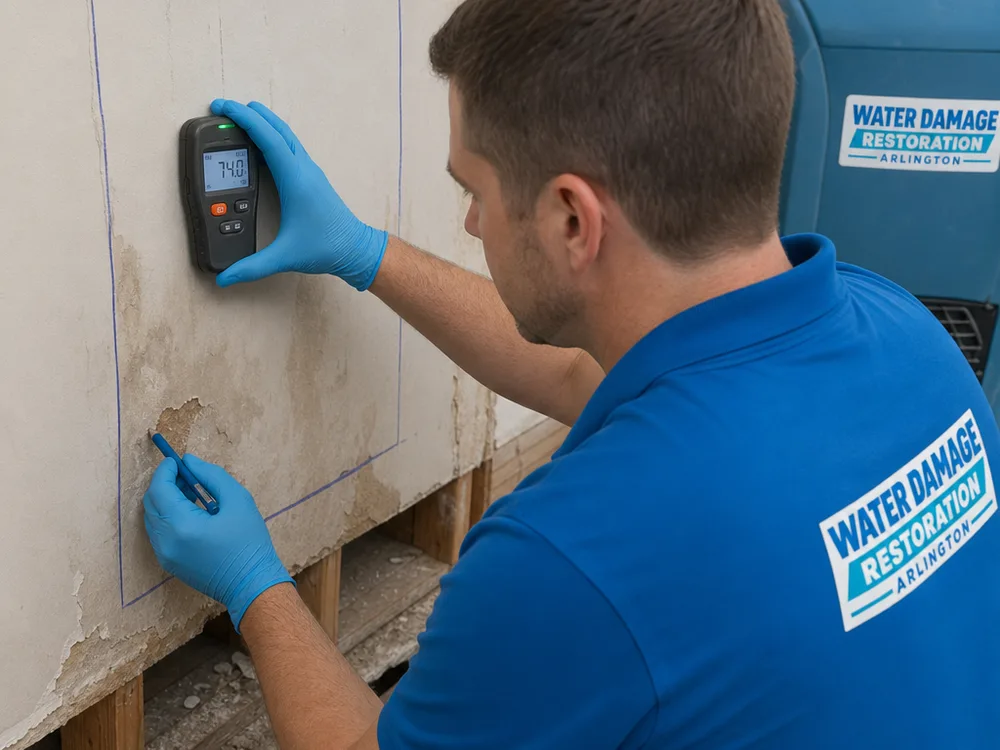
We identify the full wet area, including hidden moisture behind finishes, and document conditions so drying targets and repair scope are clear.
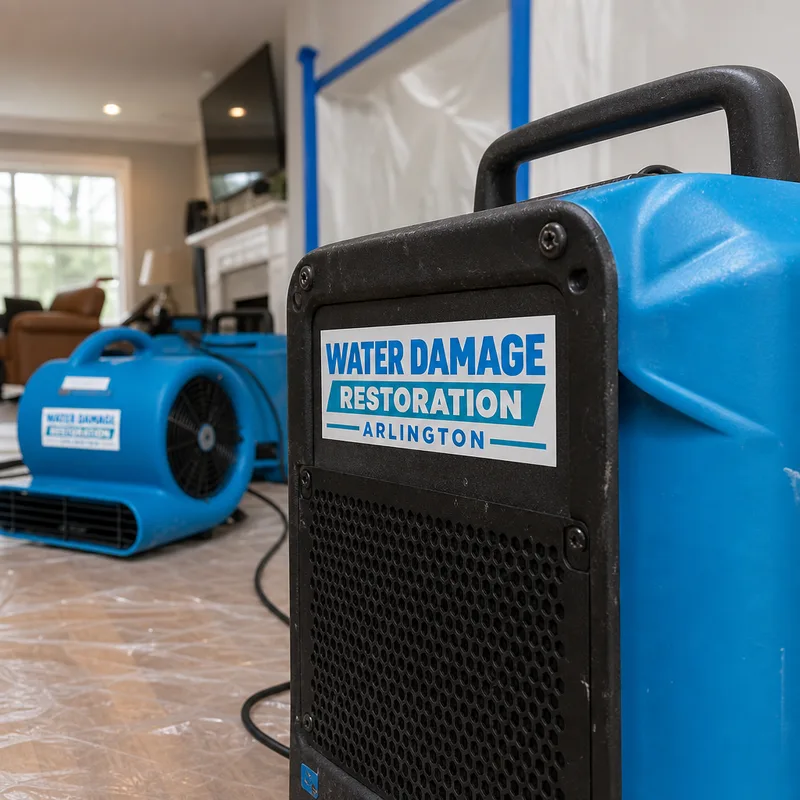
We use commercial extraction, air movement, and dehumidification sized to the loss, then adjust equipment as readings improve.
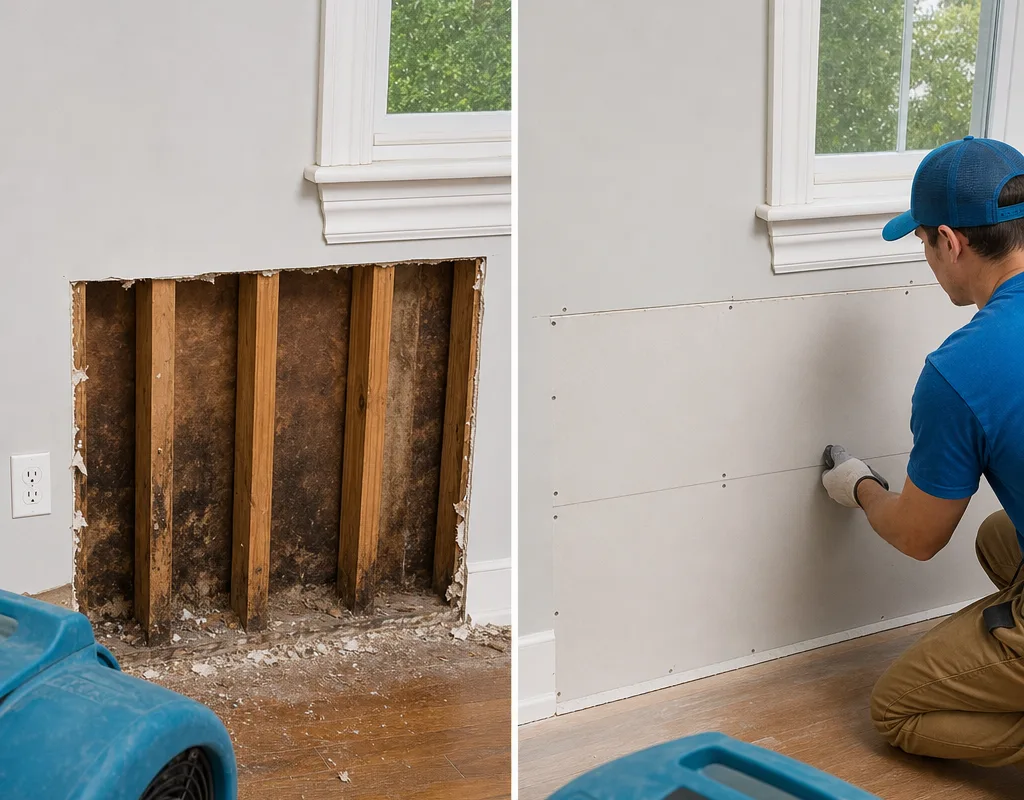
Wet materials that cannot be dried safely, such as saturated drywall or insulation, are removed in a controlled way so the structure can dry properly.
We clean and apply appropriate antimicrobial treatments based on the water category and the materials involved.
Once the structure is dry, we outline what needs to be rebuilt or replaced so you can move forward without open-ended decisions.
A measured sequence controls the source, removes standing water, dries affected materials, and verifies conditions before repairs begin.
We assess the source and category of water—clean, gray, or black—check for electrical hazards, and identify materials at risk like hardwood, drywall, and insulation.
If the source is active, we help you confirm it is stopped and set containment when needed to limit cross-contamination and protect unaffected rooms.
Standing water is extracted first. Then we decide what can dry in place and what needs selective removal so moisture is not trapped behind finishes.
We place air movers and dehumidifiers based on readings and material types, then monitor and adjust until drying goals are met.
When readings indicate the structure is dry, we document the result and provide the next-step repair scope so reconstruction can begin.
Water damage restoration in Arlington typically ranges from about $900 to $5,500+, depending on how far the water traveled and how much material must be removed and rebuilt. A small, clean-water leak confined to one room is often on the lower end, while flooded basements, multi-room losses, or contaminated water can push costs higher.
Pricing changes with square footage affected, water category, equipment days, drywall and flooring removal, cabinet impact, and access—especially in condos with parking and elevator rules. The exact cost is confirmed after an on-site inspection and moisture mapping.
Response time depends on current workload and the severity of the loss, but urgent active leaks and standing water are prioritized because drying outcomes get worse the longer water sits. If you contact us, we will confirm the soonest arrival window and what to do immediately—shutoff, power safety, and moving items—while help is on the way.
Often you can stay home during drying, especially for clean-water leaks confined to a few rooms, but it depends on noise, humidity control, and whether contaminated water or extensive demolition is involved. We explain what areas need to be kept closed off and how long equipment typically needs to run based on moisture readings.
Most structural drying takes 3 to 5 days, but the real answer depends on material type, how long water sat, and whether cavities like wall bays or subfloors were saturated. We do not stop based on the calendar; we stop when documented moisture levels show the structure has returned to a dry condition.
We remove materials only when drying in place is not safe or practical, such as saturated drywall, wet insulation, swollen particleboard, or flooring that traps moisture underneath. The goal is targeted demolition that exposes wet areas for drying while keeping the repair scope as controlled as possible.
Clean water comes from a sanitary source like a supply line. Sewage backups and toilet overflows with waste are considered contaminated water and require stricter containment, PPE, and disposal practices, plus more aggressive cleaning and antimicrobial steps. We identify the category at inspection because it directly changes the cleanup method and the materials that can be saved.
Yes. We document affected areas, equipment placement, and moisture readings, which helps support a clear claim record. Coverage varies by policy and cause of loss, so we focus on providing accurate scope and condition notes that an adjuster can understand.
The best mold prevention is rapid drying with proper airflow and dehumidification, plus removal of materials that cannot be dried. We also treat affected areas when appropriate, but treatment is not a substitute for reaching dry structural conditions verified by moisture readings.
Yes. Multi-unit buildings add coordination with property management and can involve shared walls, vertical water travel, and access constraints for equipment. We help identify the path of water so drying and repairs account for adjacent areas that may be affected.
If you are dealing with water on the floor, a leak behind a wall, or a wet ceiling, getting a measured drying plan early is the simplest way to limit repairs and avoid hidden moisture problems later.
Call for Emergency HelpTell us what happened and what areas are affected. We will schedule an inspection, map the moisture, and lay out the next steps so you can protect the property and move forward with confidence.