
Containment and pressure control
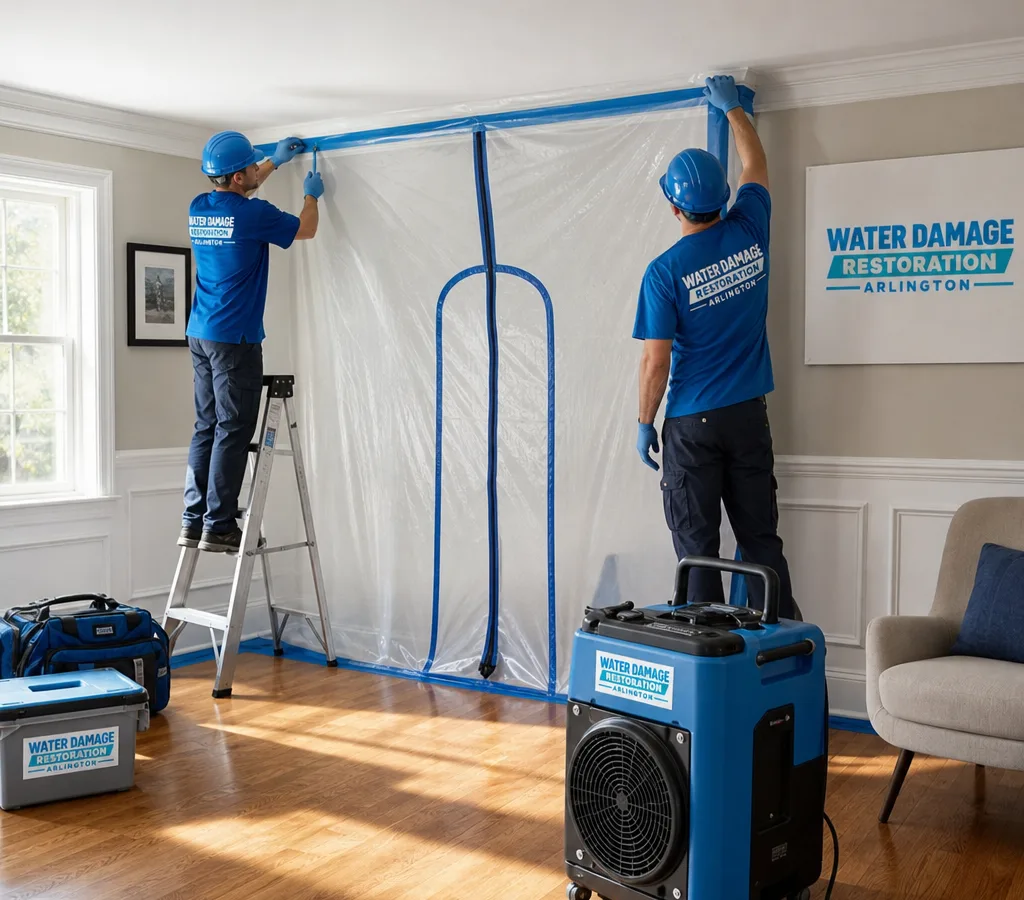
We isolate the affected area with poly sheeting and use negative air when appropriate, so disturbed spores and dust do not move into hallways, bedrooms, or adjacent offices.
Serving Arlington, Virginia & surrounding areas
If you smell a musty odor, see staining, or have had a recent leak, the safest next step is a professional inspection and a written remediation plan. We contain the area, remove affected materials, clean and treat surfaces, and verify conditions so the problem does not come right back.
Mold remediation is a controlled process to remove mold growth and the materials it has contaminated, then clean the area so airborne spores and residues are reduced to normal background levels. For mold remediation in Arlington, VA, that usually means:
Remediation is not the same thing as fixing the underlying moisture source. If the cause is a plumbing leak, roof issue, or building-envelope problem, we will point it out clearly so it can be corrected as part of the overall plan. Without that step, even a thorough cleanup can be temporary.
In Arlington, mold often follows everyday events: a slow bathroom leak, a backed-up condensate line on an HVAC system, or water intrusion after heavy rain. The region's humid summers also mean damp basements and crawlspaces can stay wet long enough for mold to get established if ventilation and drainage are not doing their job.
We see similar patterns across different parts of the county. Older housing stock around neighborhoods like Arlington Ridge and Aurora Highlands can have older plumbing runs and tight wall cavities where a small leak goes unnoticed. In Rosslyn and Crystal City, multi-family buildings can see moisture travel between units through chases and shared walls, which makes containment and coordination more important. In areas like Ballston and Clarendon with a mix of renovations and older structures, mold sometimes shows up where new finishes were installed over a damp substrate.
The goal is to stop spread, remove what cannot be cleaned safely, and leave the space dry and ready for repairs.
We isolate the affected area with poly sheeting and use negative air when appropriate, so disturbed spores and dust do not move into hallways, bedrooms, or adjacent offices.
HEPA air scrubbers and HEPA vacuums capture fine particles that ordinary shop vacs and basic filters miss. This is core to keeping the job clean.
Non-porous and semi-porous materials can often be cleaned, while heavily impacted porous materials typically need removal. We explain what is salvageable and why.
Mold remediation must include drying. We monitor moisture so the area is not closed up while it is still damp behind finishes.
You get a written scope that spells out the containment plan, removal areas, cleaning steps, and what the space should look like at completion.
For homes and active businesses, we plan access, work hours, and debris removal to limit disruption and keep clean areas clean.
A controlled sequence limits spread, removes contaminated materials, and confirms the space is dry before repairs begin.
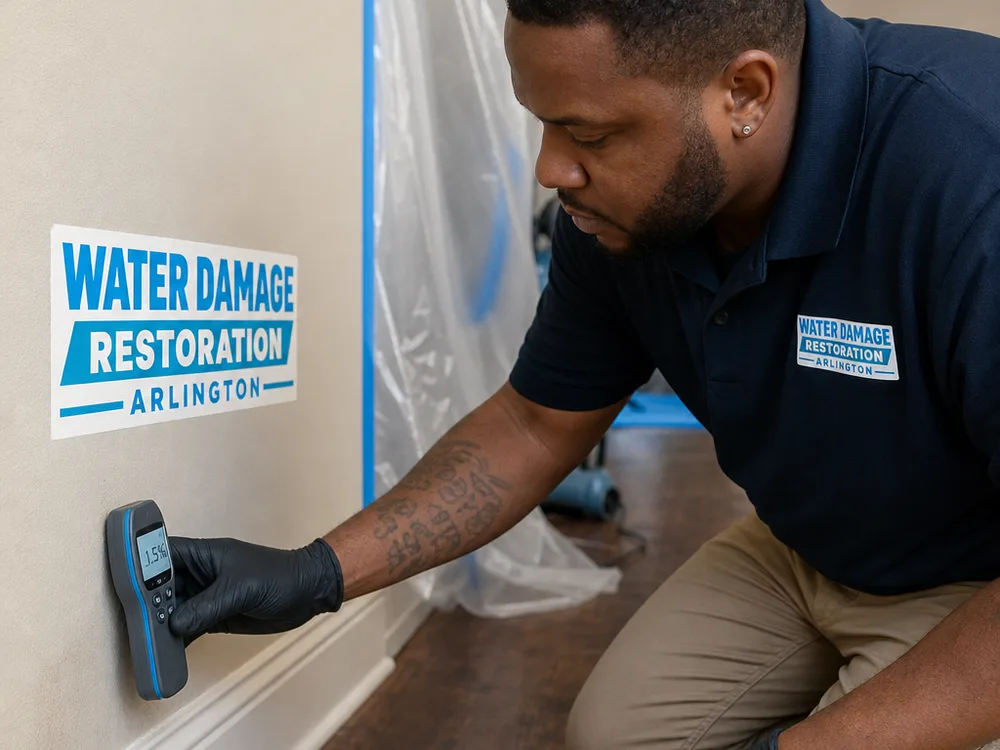
We identify where mold is present and where moisture is coming from, checking likely pathways and taking readings to find hidden damp areas.
We isolate the work zone with poly barriers and, when conditions call for it, run negative air with HEPA filtration. Floor protection and controlled entry help prevent cross-contamination.
Impacted porous materials are removed and bagged inside containment for safe disposal, cutting back to clean, structurally sound material.
We HEPA vacuum, damp wipe, and treat remaining framing and surfaces as appropriate, addressing odors at the source rather than masking them.
We dry the area and monitor moisture until conditions are stable, sizing dehumidifiers and air movers to the space and materials involved.
We review what was removed and cleaned, explain needed repairs or adjustments, and coordinate access for third-party testing if requested.
Mold remediation in Arlington typically ranges from about $900 to $6,000+, depending on how much area is affected and whether material removal is required. A small, contained job, such as limited drywall removal under a sink, is often at the low end, while multi-room or basement remediation with containment, demolition, and extended drying can run higher.
Your price changes with square footage, how far mold extends into wall or ceiling cavities, access, the need for negative air and HEPA filtration, and whether contents need cleaning or relocation. The exact cost is confirmed after an on-site inspection and a written scope.
Schedule a professional assessment promptly if you have any of the following:
If you already know the problem started with a leak or flooding, start with a plan that addresses both drying and remediation steps. Water damage restoration often includes drying and moisture control that prevents mold from taking hold in the first place.
Most mold remediation projects take 1 to 3 days on site, but larger jobs can take longer if removal is extensive or drying takes time. The biggest schedule variable is moisture: if framing or subfloors are wet, the space should be dried before it is closed back up.
Sometimes, yes, but only when the mold is truly limited to cleanable surfaces and the drywall is not contaminated in its paper facing or cavity behind it. If moisture has gotten into the drywall or insulation, removal is usually the safer option because porous materials can hold contamination even after surface cleaning.
No, but containment is common and negative air is used when conditions call for it, such as larger affected areas, occupied buildings, or when demolition will release dust and spores. The right setup depends on where the mold is, how much material must be removed, and how the air moves through the home or unit.
Bleach can discolor stains, but it often does not address mold in porous materials or the moisture that caused it. If the underlying materials are damp or contaminated inside a wall cavity, surface cleaning alone usually leads to recurrence.
Leave the area as undisturbed as possible and avoid running fans that could blow spores into other rooms. If you can, note when you first noticed the odor or staining and any recent leaks, HVAC issues, or rain intrusion, because that timeline helps narrow down the moisture source.
Yes. For condos and apartments, we plan containment and debris handling around shared hallways and building rules, and we pay close attention to how moisture may travel through chases and party walls. If coordination with building management is needed for access or scheduling, we can align the work plan with those requirements.
Preventing regrowth comes down to controlling moisture and leaving the remediated area clean and dry before repairs. We identify likely moisture sources, dry the structure to stable readings, and explain what must be fixed—leaks, ventilation, drainage, or humidity control—so conditions that allowed mold growth are not left in place.
Tell us what you are seeing and where it is happening in your Arlington property. We will inspect the area, explain whether containment or material removal is needed, and provide a written scope so you can move forward with confidence.