Mold Remediation
Containment, removal, and cleanup for confirmed mold growth, with HEPA air filtration and careful handling of affected materials.
Serving Arlington, Virginia & surrounding areas
Protect your home and reduce secondary damage. Fast on-site response for leaks, floods, and burst pipes, with moisture detection, dry-out, and repair planning.
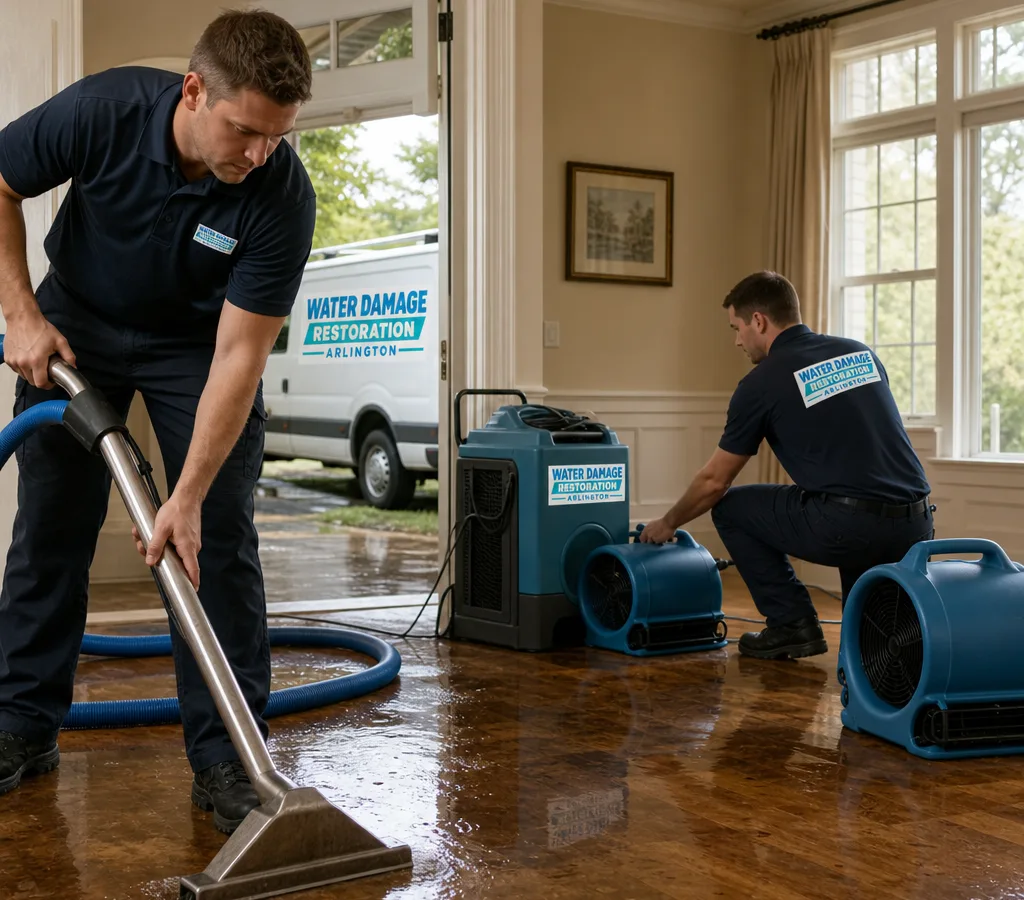
When water gets into drywall, flooring, or insulation, time matters. Water Damage Restoration Arlington provides water damage restoration Arlington VA homeowners can rely on for clear next steps: stop the source when possible, remove water, map moisture, dry the structure, and document what needs to be repaired.
Our work is built around practical on-site decisions. We use non-invasive moisture meters and thermal imaging to find wet materials behind baseboards and under flooring, then set drying equipment based on readings, not guesses. You get a written scope, straightforward communication, and a plan that aims to prevent mold growth, odors, and warping or delamination.
If your situation is active, we prioritize stabilization first: safety checks, water extraction, and containment for affected areas. Then we move into controlled structural drying and monitoring until materials reach normal moisture levels.
Containment, removal, and cleanup for confirmed mold growth, with HEPA air filtration and careful handling of affected materials.
A room-by-room assessment to identify moisture sources and suspect growth, with clear findings to guide next steps.
Rapid response for active leaks and water intrusion, including extraction, drying, and restoration planning for impacted areas.
We locate hidden wet areas in walls, ceilings, subfloors, and cavities so the dry-out targets the real problem.
Air movers and dehumidifiers are sized to the space and adjusted based on readings as materials dry.
When drywall, insulation, or flooring can't be saved, we remove only what's necessary to stop damage from spreading.
Photos and notes from the site visit help support repairs and insurance conversations if you choose to file a claim.
We protect adjacent rooms with plastic sheeting, floor protection, and debris control to keep the home livable when possible.
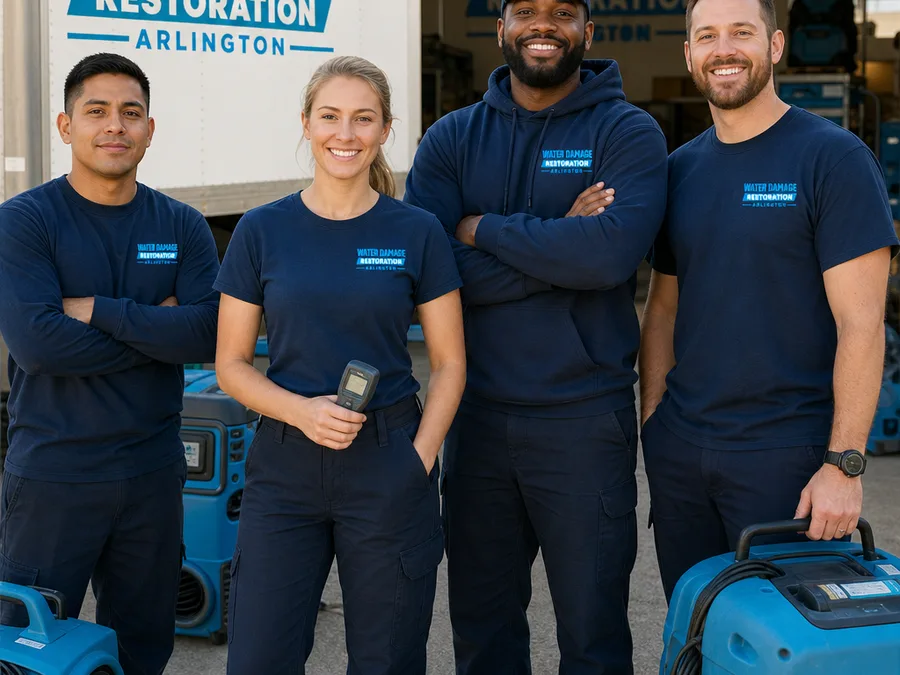
Water Damage Restoration Arlington is a local Arlington, VA team focused on stabilizing water-damaged homes and bringing them back to a safe, dry condition. We handle the details that matter on day one: identifying the category of water, checking for affected building materials, and setting a drying plan that matches the structure.
You'll always know what we're doing and why. We explain what can be dried in place, what typically needs removal, and what risks to watch for in the days after a leak or overflow. Many Arlington homes include older plaster, hardwood flooring, or finished basements, and each calls for a different approach to drying and protecting adjacent materials.
If you're unsure what qualifies as an emergency, reach out early. A small supply-line leak can soak framing or cabinets for days before it shows on the surface, and early action often reduces the amount of tear-out required.
Water damage restoration in Arlington typically ranges from about $1,200 to $6,500 for many residential jobs. Smaller clean-water incidents with limited affected materials are often in the $1,200 to $2,500 range, while multi-room drying, heavier extraction, or tear-out and rebuild coordination commonly runs $3,000 to $6,500+.
Final pricing depends on the water category, how far moisture traveled—including subfloors and wall cavities—equipment days, access, and what materials need removal. The exact cost is confirmed after an on-site inspection and moisture mapping.
A measured sequence keeps urgent stabilization, structural drying, and repair planning clear.
We assess electrical and slip hazards and help identify the source so the water is stopped before drying begins.
We remove standing water and begin surface cleaning to reduce spread into adjacent materials.
We map moisture in drywall, trim, flooring, and cavities, then outline what can be dried and what needs removal.
Dehumidifiers and air movers run in controlled conditions, with follow-up readings to confirm drying progress.
Once the structure is dry, we provide clear documentation and guidance for the repair phase.
If you're dealing with wet floors, stained ceilings, or a new leak, a quick dry-out plan can reduce the scope of repairs.
Call for Emergency HelpWe work throughout Arlington, focusing on neighborhoods where housing style and building age affect how water moves and how drying should be set up.
Request Emergency Service · (571) 600-6978Ballston: A mix of condos and older single-family homes, where water can travel between units or through shared walls.
Clarendon: Older homes and renovations with layered flooring and finished spaces that can hide moisture under hardwood.
Rosslyn: High-rise living where overflows and supply-line leaks can affect multiple floors, requiring careful documentation.
Crystal City: Dense residential buildings where rapid extraction and dehumidification help limit damage to adjacent units.
Shirlington: Many townhomes and multi-level layouts where water can move quickly to lower levels and into stairwell walls.
You should start as soon as the water source is stopped because moisture can move into drywall, insulation, and subfloors quickly. Even when surfaces look dry, water can remain trapped in cavities, which is why moisture mapping early on matters.
Yes, we handle extraction and cleanup along with the full structural drying setup. The goal is to remove standing water, dry affected materials to normal levels, and document the results so repairs can move forward confidently.
Sometimes, yes, depending on how long the water sat, how much reached the subfloor, and whether cupping or buckling has started. We take moisture readings in the flooring and subfloor and recommend drying strategies or removal based on what the structure is telling us.
If it's safe, stop the water at the shutoff, avoid rooms with ceiling sagging or electrical risk, and move small items away from wet areas. Avoid running household fans directly at saturated materials if the water source is unknown or potentially contaminated.
Yes, we can provide photos, notes, and a written scope that many homeowners use during the claims process. You remain in control of whether you file a claim, and we focus on clear, job-specific documentation.
Yes, we regularly work in multi-unit buildings where leaks can affect neighboring units. We pay extra attention to containment, shared walls and ceilings, and keeping walkways and common areas protected during drying.
Tell us what happened and where the water is showing up. We'll walk you through immediate steps to protect the home, then schedule an on-site inspection to map moisture and provide a clear scope for drying and restoration.