Clear, written findings
You receive a straightforward report with locations, photos, and plain-language notes that help you decide what to do next.
Serving Arlington, Virginia & surrounding areas
If you smell musty odors, see staining, or have had a recent leak, a certified inspection can confirm whether mold is present, how far it has spread, and what to do next. Expect clear findings, photo documentation, and practical guidance you can act on.
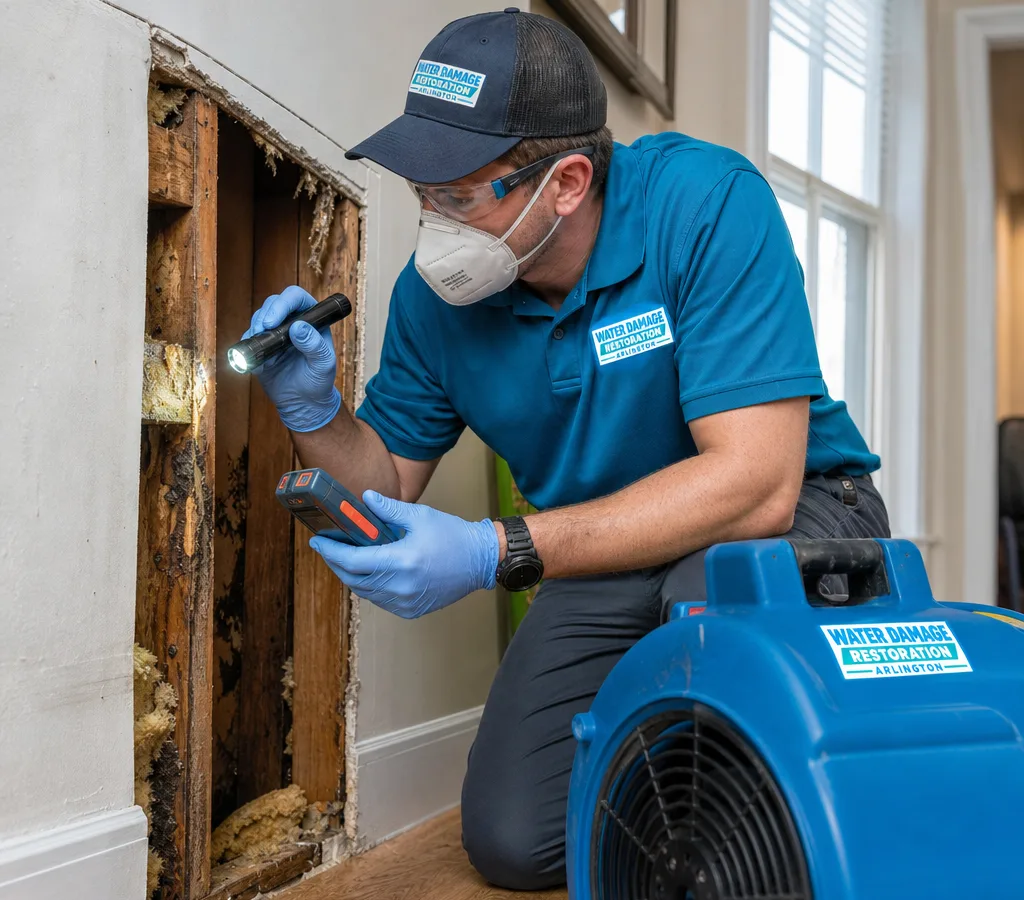
A mold problem is usually a moisture problem first. A mold inspection in Arlington VA makes sense when you have a reason to suspect moisture is getting into places it should not: after a plumbing leak, a roof leak, a wet basement event, or ongoing humidity issues.
Common triggers we hear from Arlington homeowners and property managers:
Arlington's mix of older housing stock and newer renovations can create hidden pathways for moisture. Finished basements, tight building envelopes, and older plumbing runs all increase the odds that water finds a concealed route.
In neighborhoods with more older homes and additions, like parts of Ashton Heights and Lyon Park, leaks can travel along framing and show up far from the source. In areas with more multi-family buildings, such as Rosslyn and Crystal City, shared walls, stacked plumbing, and HVAC condensate lines can make it harder to tell where moisture started. The goal of inspection is to replace guesswork with evidence.
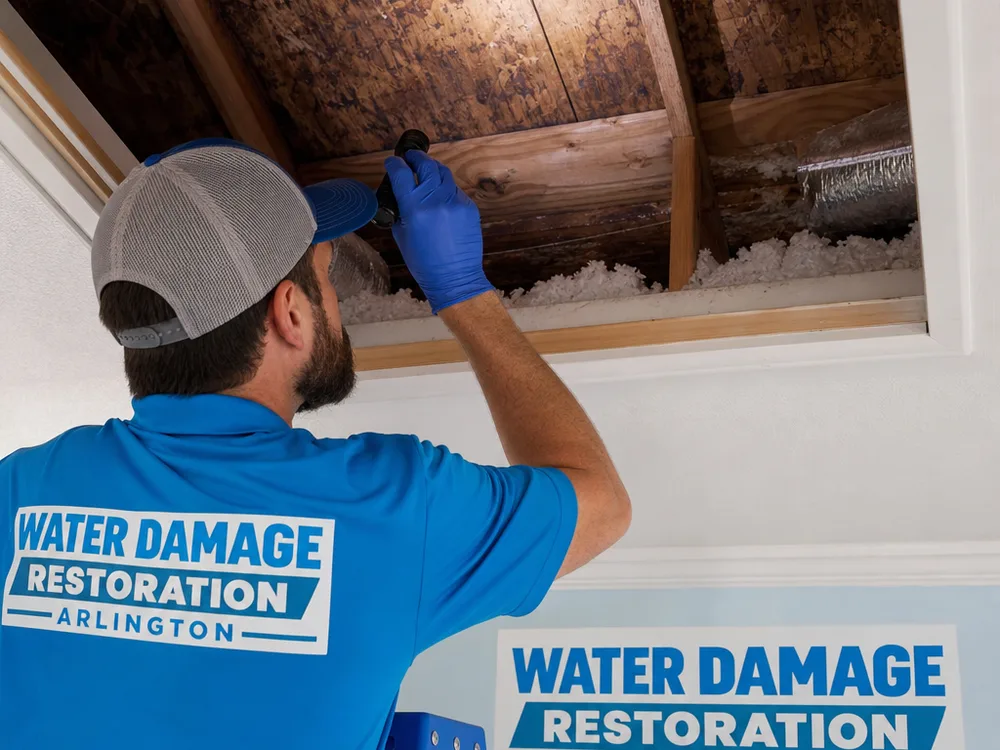
A proper inspection is part building-science and part documentation. We start by listening to what you have noticed, then we work methodically to locate moisture, assess conditions, and determine whether sampling is appropriate.
Typical inspection components:
If the inspection indicates broader moisture damage—such as wet drywall, saturated insulation, or persistent dampness—the cause should be addressed before cleanup so mold does not return after remediation.
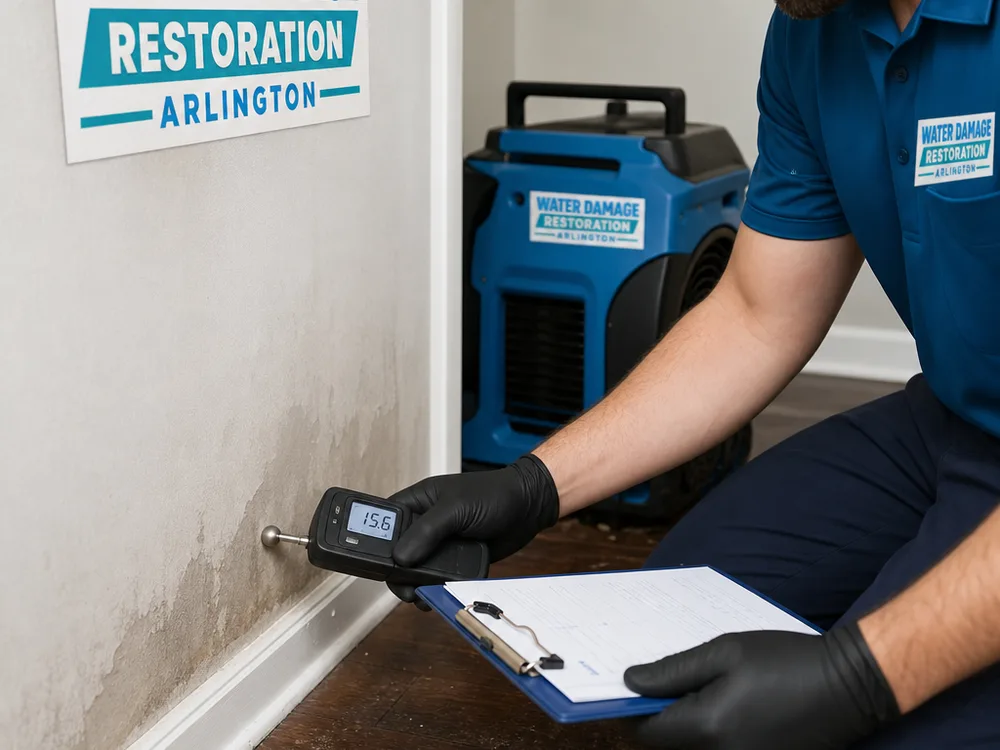
You receive a straightforward report with locations, photos, and plain-language notes that help you decide what to do next.
We focus on identifying moisture conditions and pathways, because controlling moisture is the only reliable way to prevent regrowth.
Sampling is used when it adds decision value, not as a default. If sampling is recommended, we explain what it will and will not tell you.
We work cleanly and carefully around finished spaces, furnishings, and tight access areas common in Arlington homes and condos.
If results point to remediation, repairs, or HVAC adjustments, you get practical options and a scope you can use to compare bids.
A methodical sequence connects visible conditions to moisture evidence and turns the findings into a practical plan.
We start with your timeline—leaks, odors, visible spotting, humidity—and any prior work. This helps target the inspection and avoid unnecessary disruption.
We examine the areas you are concerned about and the most likely connected spaces above, below, and behind. Basements, bathrooms, laundry areas, and exterior wall corners often deserve extra attention.
We take readings and look for patterns that point toward a source, such as plumbing lines, window leaks, roof penetrations, or condensation on supply ducts.
If the situation calls for it, we collect targeted samples and document chain-of-custody details. We also explain limitations, including that air results can vary with ventilation and recent cleaning.
You get a written summary of what we observed and what it means. If remediation is appropriate, we outline containment considerations, affected materials, and how to verify the issue is resolved.
Mold inspection in Arlington typically ranges from about $250 to $750, depending on home size, access to attics or crawlspaces, and whether sampling is needed. A basic inspection without lab work is usually on the lower end, while multi-room sampling and more complex moisture mapping trend higher.
Final pricing depends on how many areas need evaluation, the number and type of samples, and whether conditions require extra precautions in occupied spaces. The exact cost is confirmed after we review the property details and the scope of concerns.
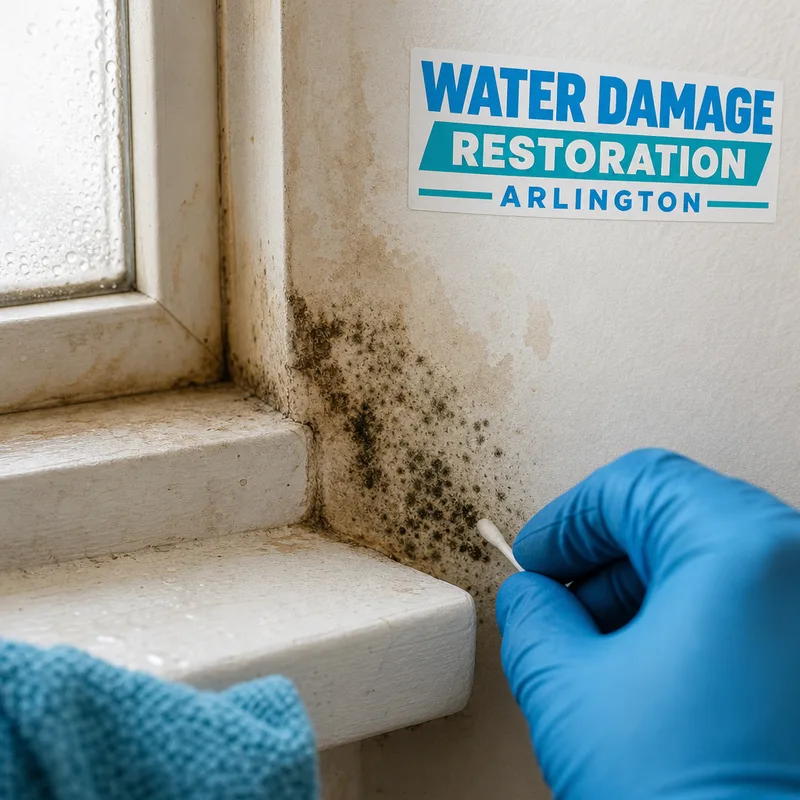
A good report should help you make decisions, not leave you with more questions. After your mold inspection, use the findings to do three things:
If the report points to an active leak, condensation, or ventilation issue, address that first. Otherwise, cleanup often becomes a temporary fix.
A useful scope describes where growth was observed, what materials are affected—drywall, insulation, framing, or carpeting—and what containment and cleaning approach is appropriate.
Ask how the work will be confirmed as complete. Depending on the situation, verification can include visual clearance, moisture targets for building materials, and optional post-remediation sampling.
If you are coordinating multiple parties—a plumber, roofer, or HVAC contractor—your report becomes the shared reference. If you are buying or selling, it becomes a document you can provide to your agent or keep for your records.
For mold tied to an ongoing damp area such as a basement or repeatedly wet wall, pairing the inspection findings with a moisture-focused plan is often the fastest way to get stable results.
No. Many inspections can reach a clear conclusion with visual evidence plus moisture readings, and testing is most useful when results will change the plan. Sampling can help confirm whether a suspect area is mold, compare indoor and outdoor air, or document conditions for a real estate transaction. If testing is recommended, you should expect a written explanation of why it helps and what the lab results can and cannot prove.
Most residential inspections take about 60 to 120 minutes, depending on the size of the home, how many areas are affected, and whether attic or crawlspace access is needed. Condos can be faster when access is straightforward, while multi-level homes with basements often take longer because moisture pathways need to be traced across levels.
Yes, as long as we can access the affected area and any adjacent spaces that may influence it. In Arlington multi-family buildings, moisture can migrate from shared plumbing walls, neighboring units, or common-area mechanical systems, so it helps to document exactly where staining, odors, or elevated moisture readings are found and whether management should involve building maintenance.
Do not disturb suspected growth or run heavy cleaners right before the visit, because that can interfere with what we observe and with any optional sampling. Clear a small path to the areas of concern—under sinks, around HVAC closets, and near basement walls—and share details about recent leaks, repairs, or dehumidifier use so the timeline is accurate.
Only laboratory analysis can identify categories from a collected sample, and even then the result is a snapshot of what was captured at that time. The practical value is usually whether mold is present, where moisture is coming from, what materials are affected, and what scope is appropriate to address it safely and permanently.
Visual and moisture findings are typically discussed at the end of the visit, and the written report follows after documentation is compiled. If samples are sent to a lab, turnaround time depends on the lab schedule, but many standard analyses return within a few business days. If you are working under a real estate deadline, mention the timeline when you schedule so we can plan appropriately.
Tell us what you are noticing and where it is happening. We will schedule a mold inspection in Arlington and provide a clear, written assessment you can use to plan the next steps with confidence.